
Supporting muscle health through advanced, whole-food derived amino acid + short chain peptides nutrition
Muscle health plays a fundamental role in mobility, physical function, recovery and healthy ageing.
During ageing, illness, injury, surgery or periods of reduced activity, maintaining adequate nutritional intake can become increasingly important. Loss of appetite, impaired digestion, malabsorption, metabolic stress and inactivity can all contribute to loss of body protein and skeletal muscle.
Research has therefore explored the role of protein, essential amino acids and protein hydrolysates as nutritional strategies to support muscle protein metabolism across a range of clinical and healthy-ageing settings.
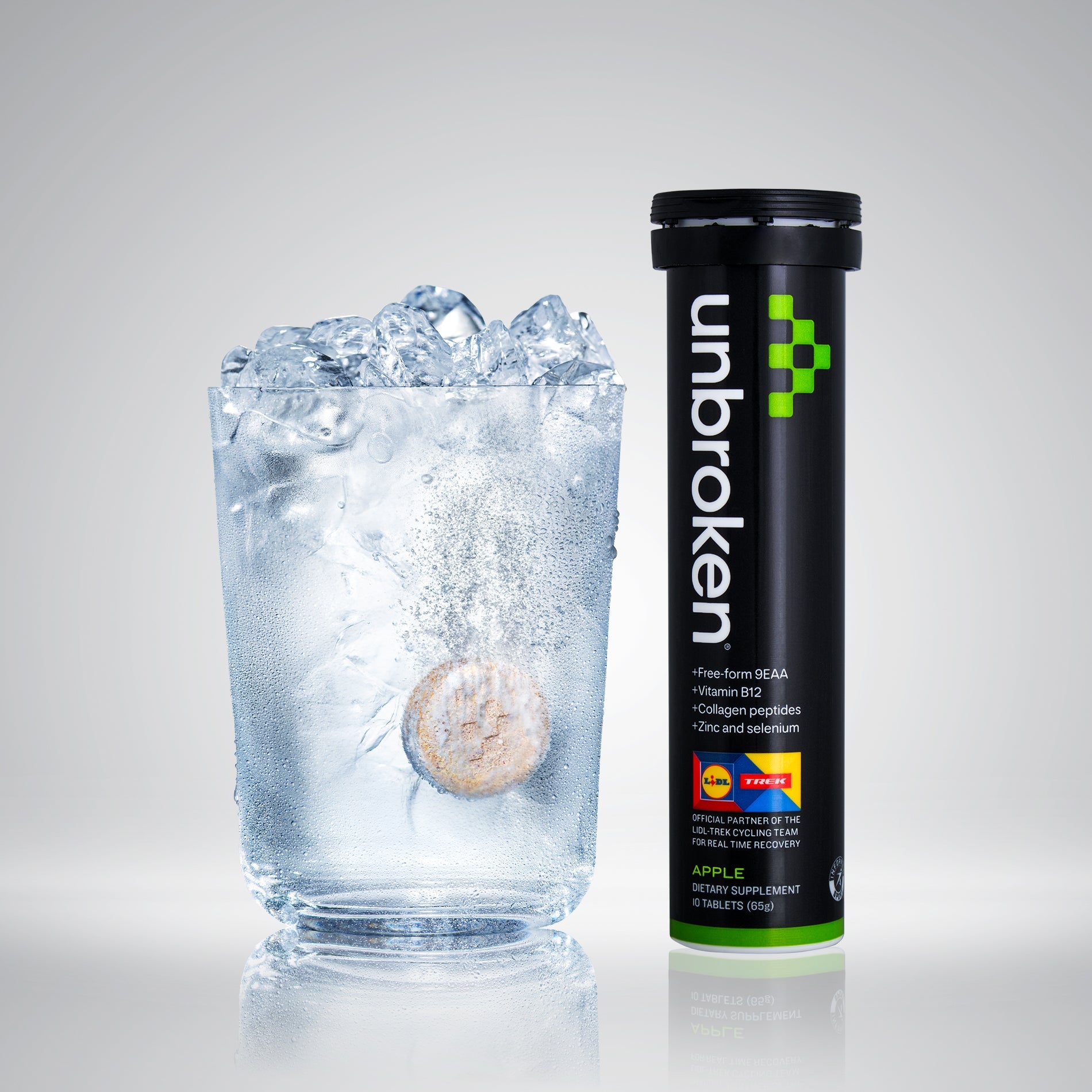
Unbroken is developing a new approach to compact amino acid nutrition based on enzymatically hydrolysed Norwegian salmon protein.
Amino acids and muscle protein synthesis
The building blocks of muscle
Skeletal muscle is built from proteins, and proteins are built from amino acids.
Amino acids have multiple functions throughout the body and are required for the synthesis of proteins, enzymes, hormones, antibodies and other biologically important molecules.
Of particular importance for muscle are the nine essential amino acids (EAAs). These cannot be synthesised by the body in sufficient quantities and therefore must be supplied through nutrition.
Muscle protein synthesis requires all nine essential amino acids. While leucine plays an important role in signalling the body to initiate MPS, all nine EAAs are needed to provide the building blocks required to make new muscle protein.
If one essential amino acid is not available in sufficient quantity, it can become a limiting factor, restricting the body's ability to sustain the muscle-building process.
Simply put: leucine helps switch on MPS, but all 9 EAAs are needed to sustain the process and build new muscle protein.
The nine essential amino acids (EAAs) cannot be produced by the body in sufficient amounts and therefore must be obtained through nutrition. Together, they provide the complete set of essential building blocks required for protein synthesis, including the maintenance and repair of skeletal muscle.
Histidine:
Supports protein synthesis, tissue growth and repair, and is a precursor to histamine.
Isoleucine (BCAA):
Supports muscle protein metabolism and contributes to energy metabolism, particularly during physical activity.
Leucine (BCAA):
Plays a key role in signalling muscle protein synthesis (MPS) and provides an essential building block for new muscle protein.
Lysine:
Required for protein synthesis and tissue repair and contributes to collagen formation.
Methionine:
Supports protein synthesis and methylation processes and is a precursor to other biologically important compounds.
Phenylalanine:
Required for protein synthesis and is a precursor to tyrosine and several important signalling molecules.
Threonine:
Supports protein synthesis and contributes to structural proteins and proteins important for intestinal function.
Tryptophan:
Required for protein synthesis and is a precursor to serotonin and melatonin.
Valine (BCAA):
Supports muscle protein metabolism and can contribute to energy production during physical activity.
Leucine, isoleucine and valine are the three branched-chain amino acids (BCAAs). While leucine plays an important role in signalling MPS, all nine EAAs are needed to provide the complete set of essential building blocks required to make new muscle protein.
Unlike intact dietary proteins, which must first be broken down through digestion, free-form amino acids are already in their individual form and require no further protein digestion before absorption.
This allows them to become rapidly available for uptake, providing the body with essential amino acids without the digestive processing required for intact protein.
For medical nutrition, this can be particularly relevant when rapid nutrient availability, low digestive demand or a compact nutritional serving is desirable.
Intact dietary proteins must first be broken down by the digestive system into smaller peptides and individual amino acids before they can be absorbed. Free-form amino acids are already in their individual form and therefore require no further protein digestion before absorption.
This can be particularly relevant when digestion, appetite or food intake is compromised, such as during hospitalisation, following surgery, during illness or with advancing age. In these situations, consuming and digesting sufficient amounts of conventional protein can become more challenging.
Minimal digestive demand can also be valuable during intense physical activity, when large meals or conventional protein servings may be impractical or difficult to tolerate around exercise.
Free-form amino acids complement rather than replace a food-first approach to protein nutrition, providing a compact source of essential amino acids when additional nutritional support or rapid availability is desirable.
Muscle protein synthesis is not determined by the total grams of protein consumed alone. The availability and composition of essential amino acids are important factors in stimulating MPS.
Research comparing free-form essential amino acids with intact protein has shown that relatively small amounts of free-form EAAs can produce a robust muscle protein synthesis response. In the study highlighted by the ISSN, 1.5 g of free-form EAAs stimulated MPS to a similar extent as 40 g of intact protein from egg, despite providing a much smaller quantity of amino acids.
This difference is attributed in part to the rapid rise in circulating essential amino acids following ingestion of free-form EAAs and their efficient use for muscle protein synthesis.
This is the principle behind compact muscle nutrition: providing all nine essential amino acids in a readily available form, without requiring a large conventional protein serving.
Free-form EAAs do not replace food-first protein nutrition. They provide a compact way to complement dietary protein and support essential amino acid availability when larger protein servings may be impractical or difficult to consume.
Essential amino acid supplementation can provide nutritional support when protein needs are increased or sufficient protein intake through food becomes more difficult to achieve.
This can include:
- ageing and loss of muscle mass (sarcopenia)
- periods of inactivity or bed rest
- recovery following illness or surgery
- reduced appetite or food intake
- eating or swallowing difficulties
- increased metabolic or physiological stress
- exercise and physical rehabilitation
- clinical conditions associated with altered protein metabolism
In these situations, maintaining an adequate supply of essential amino acids can be particularly important because they provide the essential building blocks required for muscle protein synthesis, tissue maintenance and recovery.
Amino acid supplementation is intended to complement a food-first approach to protein nutrition, providing a compact and readily available source of essential amino acids when nutritional requirements are harder to meet through conventional food alone.
Why salmon protein hydrolysate?
Salmon protein hydrolysate provides a natural alternative to conventional intact proteins such as whey. Through enzymatic hydrolysis, the protein is broken down into smaller peptides and free-form amino acids, reducing the digestive processing required before absorption.
This makes fish protein hydrolysate particularly relevant where rapid amino acid availability, reduced digestive demand or a compact nutritional format is desirable, while providing all nine essential amino acids required for muscle protein synthesis.
Fish protein hydrolysate combines the natural nutritional value of fish with the advantages of hydrolysis: all nine essential amino acids, free-form amino acids, small peptides, and naturally occurring vitamins and minerals, including vitamin B12, zinc and selenium.
Why does hydrolysis matter?
Enzymatic hydrolysis performs part of the protein digestive process before consumption.
Unlike intact proteins, which enter the digestive system as long protein chains that must first be broken down, extensively hydrolysed proteins already contain much smaller nutritional components.
These include:
Free-form amino acids:
Individual amino acids that require no further protein digestion before absorption.
Di- and tripeptides:
Very short chains of two or three amino acids that require less digestive processing than intact protein.
This can be particularly relevant when:
Appetite or food intake is reduced:
A compact nutritional format can provide essential amino acids without requiring a large conventional protein serving.
Digestive capacity is compromised:
Much of the protein breakdown has already taken place, reducing the digestive processing required before amino acids and small peptides become available for absorption.
Rapid amino acid availability is desirable:
Free-form amino acids are already present rather than first needing to be released through the digestion of intact protein.
Conventional protein servings are difficult or impractical:
Hydrolysed protein can provide amino acid nutrition in a compact and flexible format that complements a food-first approach to protein nutrition.
Naturally occurring nutrition from salmon
Salmon is a natural source of high-quality protein, providing all nine essential amino acids, together with naturally occurring peptides, vitamins and minerals.
Salmon protein hydrolysate can provide:
All nine essential amino acids:
Including the branched-chain amino acids (BCAAs) leucine, isoleucine and valine, which play important roles in muscle protein metabolism.
Naturally occurring vitamins and minerals:
Including vitamin B12, zinc and selenium, providing additional nutritional value alongside the amino acid and peptide profile.
Amino acids and peptides:
Protein is composed of amino acids linked together in chains. Hydrolysis breaks these chains into much smaller components, including individual free-form amino acids and short peptides.
The Unbroken difference
From Norwegian salmon to compact amino acid nutrition
Unbroken starts with high-quality Norwegian salmon protein and uses a proprietary natural enzymatic hydrolysis process to break the protein into free amino acids and very short peptides.
Fresh Norwegian salmon
Fresh Norwegian salmon naturally contains a complete amino acid profile, including all 9 Essential Amino Acids (EAAs), collagen peptides, Vitamin B12, Zinc and Selenium.
These nutrients provide the building blocks required for muscle maintenance, recovery and overall wellbeing.

Naturally hydrolyzed
Unbroken uses a unique enzymatic hydrolysis process. The salmon's proteins are broken down into smaller nutritional building blocks through a natural process inspired by digestion itself.
Unlike traditional proteins, this creates a high concentration of free-form amino acids and short peptides before consumption.

Compact nutrition
The result is a unique nutritional profile containing:
✓60% free-form amino acids
✓40% di- & tri-peptides
✓ Average molecular weight: 374 Dalton
✓ All 9 Essential Amino Acids
✓ Collagen peptides
This allows nutrients to become available with minimal digestive effort.
Why molecular size matters
Proteins and protein hydrolysates can differ substantially in molecular size depending on their source and degree of hydrolysis.
Intact dietary proteins are large molecular structures, commonly measured in the tens of thousands of Daltons. They must first be broken down by digestive enzymes into smaller peptides and individual amino acids before absorption.
Hydrolyzed proteins have already undergone part of this breakdown. Collagen peptides and whey protein hydrolysates typically contain peptide fractions measured in the thousands of Daltons, although their molecular-weight distributions vary considerably depending on how extensively they have been hydrolyzed. Published collagen and whey hydrolysates commonly contain substantial peptide fractions within the 1,000–5,000 Da range.
By comparison, Unbroken's extensive enzymatic hydrolysis produces an average molecular weight of approximately:
374 Da
Unbroken's extensive enzymatic hydrolysis creates an exceptionally small molecular profile, with an average molecular weight of approximately 374 Dalton.
Rather than remaining as larger protein fragments, the hydrolysate consists of approximately 60% free-form amino acids and 40% di- and tripeptides, with all nine essential amino acids naturally present.
This small molecular form means that much of the work normally performed during protein digestion has already taken place before consumption, allowing amino acids and small peptides to become available for intestinal uptake with minimal further protein breakdown.

Low digestive demand. High amino acid availability.
Unbroken's extensive hydrolysis performs much of the protein breakdown before consumption. With approximately 60% of the hydrolysate already present as free-form amino acids and the remainder predominantly as di- and tripeptides, very little further protein digestion is required before uptake.
Free amino acids can be absorbed directly, while di- and tripeptides are efficiently taken up through specialized peptide transport systems in the small intestine. This provides high bioavailability and rapid amino acid availability with minimal digestive demand.
Protein and amino acid absorption is normally highly efficient in healthy individuals. However, the advantage of extensive hydrolysis is that the digestive system has substantially less work to do before those amino acids are available for absorption.
Less breakdown required. Efficient absorption. Rapid amino acid availability.
Putting the 374 Da into perspective
10,000 to
30,000 Da
Intact protein
Large protein chains requiring digestive breakdown before absorption.
1,000 to
5,000 Da
Protein hydrolysates
Smaller peptide fractions commonly found in hydrolyzed collagen and whey proteins.
~1,000 Da
Mucosal-delivery reference
Reference used in nasal-delivery research to illustrate how molecular size influences passive membrane permeability.
374 Da
Unbroken
Average molecular weight, predominantly free-form amino acids and di- & tripeptides.
Potential areas for protein and amino acid supplementation
Medical nutrition can play an important role when nutritional requirements are increased, muscle mass is at risk, or adequate protein intake through food alone becomes difficult to achieve.
Protein and essential amino acid supplementation can complement a food-first approach, providing additional nutritional support across hospital care, post-surgical recovery, physical therapy and rehabilitation, long-term recovery and self-administration at home.
The potential applications are broad, particularly where reduced appetite, impaired digestion, inactivity, increased protein turnover or loss of muscle mass and function create additional nutritional challenges.
Ageing is associated with a progressive decline in muscle mass, strength and physical function. Adequate protein and essential amino acid nutrition, together with physical activity, can play an important role in maintaining muscle health, mobility and independence.
Illness, hospitalisation and periods of bed rest can be associated with reduced food intake, inactivity and loss of muscle mass. Protein and amino acid supplementation can complement conventional nutrition when maintaining adequate protein intake through food becomes challenging.
Surgery and tissue injury can increase metabolic demands and protein turnover. Adequate protein and essential amino acid nutrition supports the body's nutritional requirements during tissue repair and recovery, particularly when normal dietary intake is reduced.
Periods of inactivity can contribute to loss of muscle mass and function. Providing adequate protein and essential amino acids alongside physical therapy, progressive activity and rehabilitation can support the nutritional requirements of maintaining and rebuilding muscle.
Nutritional support often needs to continue beyond the hospital or clinical setting. Compact, easy-to-use nutritional formats can support continued protein and essential amino acid intake during rehabilitation, recovery and at home.
The ability to self-administer nutritional support can be particularly relevant for older adults, people recovering from illness or surgery, and those with reduced appetite or difficulty consuming conventional protein servings.
Compact amino acid nutrition provides a practical way to complement a food-first approach, making ongoing nutritional support easier to incorporate into everyday life. Nutritional support continuing beyond hospital discharge is also recognised within established clinical nutrition practice.
COPD can be associated with reduced food intake, altered protein metabolism and loss of skeletal muscle, contributing to reduced strength and physical function. Adequate protein and amino acid nutrition can therefore be an important consideration as part of overall nutritional support.
Maintaining nutritional status can be challenging in cystic fibrosis due to factors including pancreatic insufficiency, malabsorption, reduced food intake and increased nutritional requirements. Easily digested protein and amino acid nutrition may therefore be relevant as part of nutritional management.
Ageing, illness, medication and recovery can make it difficult to consume sufficient food or conventional protein servings. Compact amino acid nutrition can provide essential amino acids in a small nutritional format, complementing dietary protein when appetite or food volume is limited.
Women can experience changing nutritional requirements throughout life, including during menstruation, pregnancy, menopause and healthy ageing. Maintaining adequate protein and essential amino acid intake is important for supporting muscle mass, strength and physical function.
Iron status is also an important nutritional consideration for women, particularly during the reproductive years. Research into salmon protein hydrolysates has explored the potential role of marine-derived peptides in supporting iron bioavailability and utilisation, creating an additional area of nutritional interest alongside amino acid support for muscle health.
Protein and essential amino acid requirements change during pregnancy and lactation. Adequate nutrition is essential during these periods, and any targeted amino acid supplementation should form part of an appropriately managed nutritional approach.
Marine-derived proteins, amino acids and peptides have potential nutritional applications beyond skeletal muscle, with particular interest in collagen, connective tissue and skin health.
Poor nutritional status and loss of muscle mass can affect recovery, physical function, independence and care requirements. Effective nutritional support therefore has potential relevance not only to individual health and recovery, but also to healthcare utilisation and the economic burden associated with prolonged recovery and loss of function.
Across these settings, protein and amino acid supplementation can complement a food-first approach, providing additional nutritional support when adequate protein intake is difficult to achieve through conventional food alone.
Select clinical evidence
A growing body of research has investigated essential amino acids, fish and marine protein hydrolysates, muscle health and medical nutrition across a range of nutritional and clinical settings.
We highlight some of the key studies most relevant to Unbroken's medical nutrition platform, alongside a broader body of scientific research in these areas.
Together, these studies represent a selection of key research across essential amino acids, fish and marine protein hydrolysates and clinical nutrition, alongside a broader body of scientific evidence investigating their potential applications in muscle health, healthy aging, recovery and medical nutrition.
The International Society of Sports Nutrition (ISSN) Position Stand reviews the scientific evidence on essential amino acid (EAA) supplementation and muscle protein synthesis. It highlights that all nine EAAs are required to support MPS, with leucine playing an important role in initiating anabolic signaling.
The review also highlights the rapid availability of free-form EAAs and their ability to stimulate MPS at relatively small doses. The evidence extends beyond sports nutrition to areas including healthy aging, rehabilitation, inactivity and clinical conditions associated with muscle loss or altered protein metabolism.
Ferrando AA, Wolfe RR, Hirsch KR, et al.
International Society of Sports Nutrition Position Stand: Effects of Essential Amino Acid Supplementation on Exercise and Performance.
Journal of the International Society of Sports Nutrition. 2023;20(1):2263409.
DOI: 10.1080/15502783.2023.2263409
A randomized controlled trial investigated marine protein hydrolysate supplementation in adults aged 65 years and older, assessing physical performance, grip strength and gait speed. No significant differences were found between the supplementation and control groups. The participants were generally well-functioning, physically active and consuming adequate protein, and the researchers identified a need for further investigation in older populations with greater nutritional or functional challenges.
Nygård LAK, Mundal I, Dahl L, et al.
Limited Benefit of Marine Protein Hydrolysate on Physical Function and Strength in Older Adults: A Randomized Controlled Trial.
Marine Drugs. 2021;19(2):62.
DOI: 10.3390/md19020062
This scientific review examined the potential role of fish-derived protein hydrolysates in metabolic health, skeletal muscle mass and function during aging. The authors highlight their amino acid and peptide composition, digestibility and potential as an alternative nutritional protein source.
The review identifies skeletal muscle, body composition, amino acid availability and metabolic health as important areas of interest while emphasizing that additional human clinical research is required.
Lees MJ, Carson BP.
The Potential Role of Fish-Derived Protein Hydrolysates on Metabolic Health, Skeletal Muscle Mass and Function in Ageing.
Nutrients. 2020;12(8):2434.
DOI: 10.3390/nu12082434
A randomized clinical study involving 120 slightly overweight adults investigated supplementation with an enzymatically produced fish protein hydrolysate alongside a mildly calorie-restricted diet.
Fish protein hydrolysate supplementation was associated with reductions in body weight, BMI and fat mass, together with changes in the appetite-related hormones CCK and GLP-1. The research provides human clinical evidence for the potential nutritional and metabolic effects of fish-derived protein hydrolysates.
Nobile V, Duclos E, Michelotti A, et al.
Supplementation with a Fish Protein Hydrolysate (Micromesistius poutassou): Effects on Body Weight, Body Composition, and CCK/GLP-1 Secretion.
Food & Nutrition Research. 2016;60:29857.
DOI: 10.3402/fnr.v60.29857
This comprehensive review examined research into fish-derived proteins, protein hydrolysates and peptides and their potential role in human health.
The review discusses their nutritional characteristics and research relating to body composition, glucose metabolism, lipid metabolism and other aspects of metabolic health, while identifying the need for further controlled human studies.
Dale HF, Madsen L, Lied GA.
Fish-Derived Proteins and Their Potential to Improve Human Health.
Nutrition Reviews. 2019;77(8):572–583.
DOI: 10.1093/nutrit/nuz016
This scientific review examined the factors influencing drug absorption across the nasal mucosa, including the role of molecular size in membrane permeability.
The review identifies an approximate molecular-mass cut-off of 1,000 Da for nasal epithelial permeability, providing a pharmaceutical reference for how molecular size can influence transport across biological membranes. This research illustrates the broader principle that smaller molecular size can facilitate biological transport. Intestinal absorption is a different process, with free amino acids and small peptides taken up through specialized nutrient transport systems.
Ugwoke MI, Verbeke N, Kinget R.
The Biopharmaceutical Aspects of Nasal Mucoadhesive Drug Delivery.
Journal of Pharmacy and Pharmacology. 2001;53(1):3–21.
DOI: 10.1211/0022357011775145
A systematic review and meta-analysis of 13 randomized controlled trials involving 439 people with stable COPD examined the effects of nutritional support.
Nutritional intervention increased energy and protein intake and was associated with improvements in body weight and grip strength, highlighting the importance of nutritional support in people with COPD who may experience reduced nutritional intake, weight loss and impaired physical function.
Collins PF, Stratton RJ, Elia M.
Nutritional Support in Chronic Obstructive Pulmonary Disease: A Systematic Review and Meta-Analysis.
The American Journal of Clinical Nutrition. 2012;95(6):1385–1395.
DOI: 10.3945/ajcn.111.023499
This critical review evaluated research into higher-protein diets, satiety, thermogenesis, energy intake and weight loss.
The evidence indicates that higher protein intake can increase satiety and diet-induced thermogenesis, with some studies demonstrating greater short-term weight and fat loss. It highlights the broader importance of protein nutrition when managing energy intake and body composition.
Halton TL, Hu FB.
The Effects of High Protein Diets on Thermogenesis, Satiety and Weight Loss: A Critical Review.
Journal of the American College of Nutrition. 2004;23(5):373–385.
DOI: 10.1080/07315724.2004.10719381
A large prospective study involving 3,142 people with cystic fibrosis examined the relationship between nutritional status during early childhood and subsequent clinical outcomes.
Better nutritional status was associated with better growth and lung function, fewer complications and improved survival, demonstrating the importance of maintaining adequate nutrition in cystic fibrosis. This study addresses the importance of nutritional status in CF rather than specifically investigating amino acid or fish protein hydrolysate supplementation.
Yen EH, Quinton H, Borowitz D.
Better Nutritional Status in Early Childhood Is Associated with Improved Clinical Outcomes and Survival in Patients with Cystic Fibrosis.
The Journal of Pediatrics. 2013;162(3):530–535.e1.
DOI: 10.1016/j.jpeds.2012.08.040
This scientific review examined the potential applications of marine fish-derived proteins, peptides, hydrolysates and collagen in cosmeceuticals.
The research explores areas including skin health, collagen, antioxidant activity and tissue regeneration, illustrating the broader scientific interest in marine-derived proteins and peptides beyond skeletal muscle nutrition. Much of the evidence in this area remains preclinical.
Venkatesan J, Anil S, Kim SK, Shim MS.
Marine Fish Proteins and Peptides for Cosmeceuticals: A Review.
Marine Drugs. 2017;15(5):143.
DOI: 10.3390/md15050143

Research and clinical collaboration
Advancing the science of compact amino acid nutrition
Unbroken is interested in collaborating with clinicians, researchers, healthcare institutions and nutrition specialists to further investigate salmon protein hydrolysate and essential amino acid nutrition.
Areas of interest include:
- Muscle preservation and healthy ageing
- Clinical recovery and rehabilitation
- Nutritional support during reduced intake
- Metabolic health
- Gastrointestinal and malabsorption-related nutritional challenges
- Women's health
- Additional applications of marine-derived amino acids and peptides
For more information
Interested in Unbroken medical nutrition?
Whether you are a healthcare professional, researcher, clinical nutrition specialist or potential partner, we would be pleased to provide additional scientific and product information.