
By Geir Gunnar Markusson, MSc in Nutrition. Recovery depends on four essential pillars: nutrition, exercise, sleep and mental health. Discover why sleep is so important for muscle recovery, what happens during different sleep stages, and how nutrition can support the body's overnight repair and adaptation.
The power of doing less
You can train harder, lift heavier, run further and push yourself to new limits. But what if one of the most important things you could do to improve your performance had nothing to do with training?
I often tell athletes: "You think you're cool because you can do 100 push-ups? You'd be much better off getting eight hours of sleep." We live in a culture that celebrates doing more: more repetitions, more kilometres, more training sessions. But performance is not simply about how much work you put in. It is also about how well your body recovers.
As a nutritionist, I have developed a framework built around four pillars of performance and recovery: nutrition, exercise, sleep and mental health. Each is essential, and weakness in one can undermine the others. Yet sleep is often the most underestimated. We carefully plan training and nutrition, while sleep is frequently treated as whatever time remains at the end of the day.
Sleep is not simply a break from activity. It is an active biological process supporting muscle repair, hormonal regulation, immune function, learning and adaptation to training.
"You think you're cool because you can do 100 push-ups? You'd be much better off getting eight hours of sleep." Geir Gunnar Markusson, Nutritionist
The four pillars of performance and recovery
I ask athletes to imagine four columns supporting a structure. Each represents a foundation of physical and mental performance.
- Nutrition: Provides the energy, carbohydrates, fat, protein, essential amino acids and micronutrients needed to maintain muscle tissue and support recovery.
- Exercise: Creates the stimulus for adaptation, improving strength, endurance and cardiovascular health, but also generates fatigue that requires recovery.
- Sleep: Supports tissue maintenance, hormonal regulation, learning and physical and neurological recovery.
- Mental health: Influences motivation, emotional resilience and stress management, all of which affect recovery and performance.
These pillars are interconnected. Poor sleep can affect appetite, mood and exercise performance. Inadequate nutrition can limit adaptation, while excessive training without sufficient recovery increases fatigue. I therefore ask athletes: What is your weakest pillar? Improving it may be more beneficial than simply training harder.
What happens while we sleep?
Sleep is not one continuous state. Throughout the night, we cycle through different stages, typically in cycles lasting approximately 70 to 120 minutes. Each contributes to recovery in different ways.
- Deep sleep: physical restoration. Associated with growth hormone secretion, tissue maintenance and metabolic regulation. It is concentrated mainly in the first part of the night and is particularly relevant to physical recovery.
- REM sleep: learning and emotional recovery. Supports memory processing, motor learning and emotional regulation. For athletes, this includes consolidating movement skills and managing the psychological demands of competition. REM periods generally become longer later in the night.
- Light sleep: the essential foundation. Makes up the largest proportion of a typical night's sleep and supports learning, memory and the normal transitions between sleep stages.
All three stages matter. Recovery depends on sufficient, consistent sleep that allows the body to move naturally through its different stages, rather than maximising one particular stage.
Too little sleep can mean more injuries
Insufficient sleep affects more than energy levels. It can impair reaction time, coordination, concentration and decision-making, potentially increasing the risk of mistakes during training and competition.
Research has also linked insufficient sleep with greater sports injury risk. One study of adolescent athletes found that those sleeping fewer than eight hours per night were more likely to report injuries. Although findings vary across populations, inadequate sleep combined with high training loads may increase vulnerability to injury and make recovery more difficult.
Sleep also supports normal tissue maintenance, immune function and adaptation to exercise. While one poor night's sleep does not automatically lead to injury, consistently sacrificing sleep while increasing training intensity is a poor long-term strategy.
Protecting sleep should be part of injury prevention, alongside sensible training progression, adequate nutrition and appropriate rest.
Why seven to nine hours matters
For most adults, seven to nine hours of sleep per night is a sensible target, while athletes with demanding schedules may benefit from additional sleep opportunities.
Tom Walker, who works with athletes on performance and recovery, captured the importance of consistency during an interview with Unbroken:
"Sleep for one night and you feel great. Sleep well for seven days and you feel like a million dollars." Tom Walker
One good night's sleep can help restore energy, but consistent sleep habits support recovery and adaptation over time. Sleep should be planned as deliberately as training and nutrition, rather than treated as an optional extra.
Sleep before competition: preparing for the night you might not sleep
Pre-race nerves can make sleep difficult, even when the body needs rest most. Filipino triathlete Khimberly Paquibot knows this well. Before competitions, she often sleeps only four to five hours, so she deliberately prioritises additional sleep during the preceding week.
Ahead of a race in Panglao, Bohol, Khimberly was concerned that she had not fully recovered from a previous full-distance IRONMAN. Following advice from her coach, Sebastian Teves, she took two Unbroken tablets before bed. Despite her concerns, she recalls waking up feeling fresh and ready to race, rather than carrying the fatigue she had previously experienced. She finished second in her age group.
"I always make sure I take Unbroken before going to bed."Khimberly Paquibot, IRONMAN Triathlete
Khimberly now includes Unbroken in her bedtime recovery routine, particularly before demanding training or competition. Her experience is personal rather than clinical evidence that Unbroken compensates for insufficient sleep, but it illustrates the importance of combining sleep preparation with consistent recovery nutrition.

Being selfish with recovery
Sebastian Teves is a sports coach, triathlon coach and IRONMAN World Championship athlete. During peak preparation, he trains 25 to 30 hours per week, making recovery as important as the training itself.
"In this sport, you have to be selfish with recovery."Sebastian Teves, Triathlon coach and IRONMAN Athlete
For Sebastian, this means protecting sleep, eating properly, allowing sufficient time between demanding sessions and taking naps when possible. Short daytime naps can improve alertness and help manage fatigue, although they should complement rather than replace adequate nighttime sleep.
His philosophy challenges the belief that more training is always better. Training creates the stimulus for improvement, but recovery allows the body to adapt. Sometimes, rest is the most productive choice.
Can nutrition support overnight muscle recovery?
As a nutritionist, I find the relationship between sleep and nutrition particularly interesting. Muscle protein turnover continues throughout the night, as the body constantly breaks down and rebuilds proteins, including those in skeletal muscle.
Essential amino acids are necessary for muscle protein synthesis, and research has shown that consuming sufficient protein before sleep can increase overnight muscle protein synthesis, particularly after resistance exercise. However, benefits depend on the amount and composition of protein, overall dietary intake and training requirements.
The foundation remains adequate daily energy and protein from a varied diet. Supplements should support that foundation, not replace it.
Magnesium: supporting muscle function and sleep
Magnesium contributes to normal muscle and nervous-system function, energy metabolism and protein synthesis. It is also involved in physiological processes associated with relaxation and sleep.
Some studies suggest magnesium supplementation may improve sleep in certain individuals, but evidence remains mixed, particularly for people who already consume sufficient magnesium. Good dietary sources include nuts, seeds, legumes, whole grains and leafy green vegetables.
For those using magnesium supplements, a water-soluble formulation may be included in an evening routine alongside Unbroken, provided the product is suitable for mixing. Compatibility depends on the formulation, and the combination has not been clinically shown to provide additional sleep benefits.
Where Unbroken fits into overnight recovery
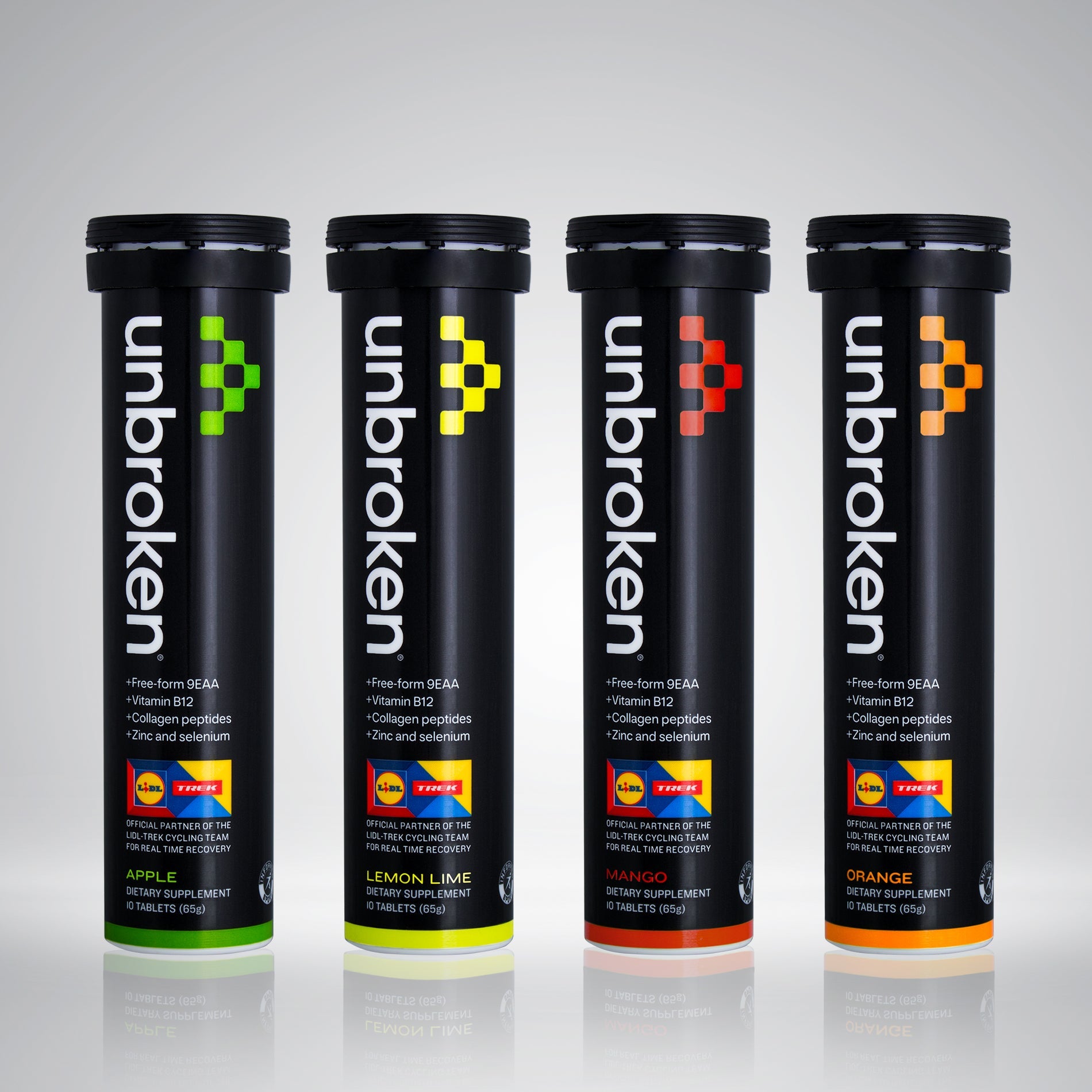
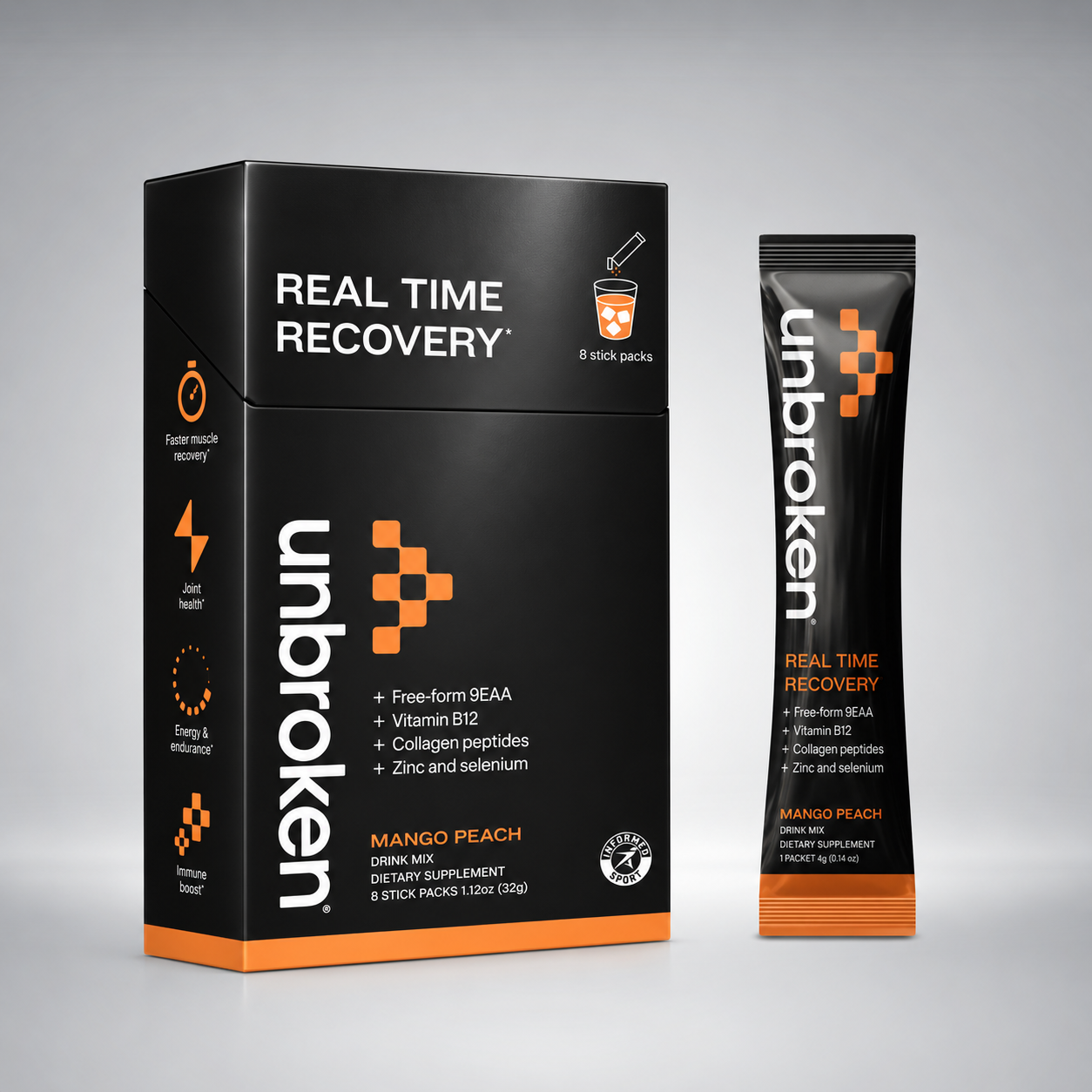
Unbroken provides hydrolysed Norwegian salmon protein containing marine peptides and free-form amino acids, including all nine essential amino acids. Hydrolysis breaks the protein into smaller components, creating a convenient format designed for minimal digestive demand.
Importantly, Unbroken is caffeine-free, making it suitable for an evening recovery nutrition routine without introducing a stimulant before bedtime. For Sebastian, taking Unbroken before sleep has become a regular habit.
"Before bed. That's the staple." Sebastian Teves
Sebastian has compared his WHOOP recovery data and observed higher heart rate variability (HRV) during a week using Unbroken than during a comparable week without it. Khimberly has reported similarly encouraging recovery readings.
These are individual experiences, not controlled clinical evidence that Unbroken improves sleep or HRV. Nevertheless, they illustrate how athletes incorporate marine peptides and amino acids into their recovery routines.
Research supports the role of adequate protein and essential amino acids in muscle recovery, although studies using larger conventional protein servings cannot automatically establish equivalent effects for Unbroken's smaller serving.
Nutrition provides the building blocks, while sleep provides essential conditions for recovery. Neither replaces the other.

Recovery goes beyond sport
Recovery is not exclusive to professional athletes. The same principles apply whether you are training for an IRONMAN, playing tennis, managing a demanding career or maintaining muscle strength as you age.
Sleep supports cognitive performance, emotional health, immune function and metabolic regulation. Together with adequate nutrition and regular exercise, it contributes to maintaining muscle function, mobility and long-term health.
Recovery should not be considered a luxury reserved for elite sport. It is a fundamental part of looking after our bodies throughout life.
The bottom line: recovery is part of the work
Nutrition, exercise, sleep and mental health form the four pillars of performance and recovery. Each supports the others, and neglecting one can undermine the benefits of the rest.
Deep sleep supports physical restoration, REM sleep contributes to learning and emotional processing, and light sleep provides an essential part of healthy sleep architecture. Together, they make sleep one of the most important foundations of recovery.
Good nutrition, including sufficient protein, essential amino acids and micronutrients such as magnesium, supports the body's ongoing maintenance and repair. Recovery nutrition can play a supporting role, but it cannot replace adequate sleep.
Before adding another workout, another kilometre or another set of repetitions, consider whether your body has enough time to benefit from the work you are already doing.
Sometimes the best thing you can do for tomorrow's performance is to get eight hours of sleep tonight.
Scientific references
1. Watson NF, Badr MS, Belenky G, et al. Recommended Amount of Sleep for a Healthy Adult. Sleep. 2015;38(6):843–844. https://doi.org/10.5665/sleep.4716
2. Fullagar HHK, Skorski S, Duffield R, et al. Sleep and Athletic Performance. Sports Medicine. 2015;45:161–186. https://doi.org/10.1007/s40279-014-0260-0
3. Mah CD, Mah KE, Kezirian EJ, Dement WC. The Effects of Sleep Extension on Athletic Performance. Sleep. 2011;34(7):943–950. https://doi.org/10.5665/SLEEP.1132
4. Res PT, Groen B, Pennings B, et al. Protein Ingestion Before Sleep Improves Postexercise Overnight Recovery. Medicine & Science in Sports & Exercise. 2012;44(8):1560–1569. https://doi.org/10.1249/MSS.0b013e31824cc363
5. Snijders T, Trommelen J, Kouw IWK, et al. The Impact of Pre-sleep Protein Ingestion on the Skeletal Muscle Adaptive Response to Exercise in Humans. Frontiers in Nutrition. 2019;6:17. https://doi.org/10.3389/fnut.2019.00017
6. Rasch B, Born J. About Sleep's Role in Memory. Physiological Reviews. 2013;93(2):681–766. https://doi.org/10.1152/physrev.00032.2012
7. Milewski MD, Skaggs DL, Bishop GA, et al. Chronic Lack of Sleep Is Associated With Increased Sports Injuries in Adolescent Athletes. Journal of Pediatric Orthopaedics. 2014;34(2):129–133. https://doi.org/10.1097/BPO.0000000000000151
8. National Institutes of Health, Office of Dietary Supplements. Magnesium: Fact Sheet for Health Professionals. https://ods.od.nih.gov/factsheets/Magnesium-HealthProfessional/