As GLP-1 medications reshape the conversation around weight loss and metabolic health, they are also raising important questions about muscle preservation, nutrition, movement and long-term health. We invited Todd Norwood, PT, DPT, FACHE, physical therapist, lifelong cyclist and co-author of a 2025 perspective on GLP-1 medications and physical therapy, to share his perspective as a guest writer for Unbroken. Drawing on his clinical work, published research and personal experience with Unbroken, Todd explores why successful weight loss should be about more than the number on the scale, and how nutrition, strength, recovery and consistent small steps can help build a healthier, more capable body for the long term.
By Todd Norwood, PT, DPT, FACHE
I became interested in GLP-1 medications through my work as a physical therapist. At Omada Health, I work with people across a range of health needs, including individuals living with chronic conditions such as diabetes, hypertension, overweight and obesity. As GLP-1 medications began transforming the treatment landscape, I became increasingly interested in a question that sits very close to my own profession: What happens to the rest of the body as someone loses a significant amount of weight, and how can we help that person become not just lighter, but healthier, stronger and more physically capable?
That question led me, together with two physical therapy colleagues, to examine the role our profession can play in supporting people using GLP-1 medications. In 2025, we published a perspective in Physical Therapy & Rehabilitation Journal, “Transforming Care: Implications of Glucagon Like Peptide-1 Receptor Agonists on Physical Therapist Practice.”
Our paper explored an important idea: GLP-1 medications can be a powerful tool in the management of obesity and diabetes, but medication should be considered within a much broader approach to long-term health. That means thinking about nutrition, preserving muscle, increasing physical activity and building sustainable behaviors that can continue over time.
“Weight loss is only part of the picture. We should also be asking: What are we preserving while that weight comes off?”
When you eat less, what you eat matters more
GLP-1 medications work in part by reducing appetite and increasing satiety. For many people, that means eating substantially less. While that reduction in calories supports weight loss, it can also make it more challenging to consume enough protein, vitamins, minerals and other essential nutrients. Our paper highlighted the potential loss of lean muscle mass during significant caloric restriction, particularly when protein intake is inadequate.
Muscle is much more than something we build for appearance or athletic performance. It is fundamental to movement and strength, and it also plays an important role in metabolic health and glucose regulation. For me, preserving muscle during weight loss is an investment in how we want to live, move and remain physically capable as we age.
Muscle needs more than protein
As a physical therapist movement and exercise are key pillars to my practice. However, nutrition alone isn't enough. One of the points we emphasized in our paper is the importance of combining adequate protein with resistance exercise when the goal is to preserve lean mass.
Protein provides the nutritional building blocks, while resistance exercise provides the stimulus. Research supports combining increased protein intake with resistance exercise as a strategy to help mitigate muscle loss during a caloric deficit.
That doesn't mean everyone needs to become a bodybuilder or spend hours in a gym. Resistance training can begin simply and progress gradually, while aerobic activity supports cardiovascular fitness, metabolic health and everyday function. The best exercise program isn't necessarily the most sophisticated one. It's the one you enjoy and that becomes part of your life.
Eat Real Food – and make every bite count
Nutrition is a vital piece of the puzzle and I advocate from getting as much of your nutrition from real foods. . If you're eating less, the nutritional quality of what you do eat becomes increasingly important. Protein is a major part of that equation, alongside adequate vitamins, minerals and other essential nutrients. But reduced appetite can make this challenging. Another large meal or protein-heavy plate may simply not be appealing.
That's where practical nutritional strategies can become useful. The goal isn't to replace whole foods. Food should remain the foundation. It's about finding simple ways to help meet nutritional needs when appetite, meal size or daily routines make that more difficult.
“When you are eating less, what you do eat needs to work harder for you.”
Where I see a role for Unbroken
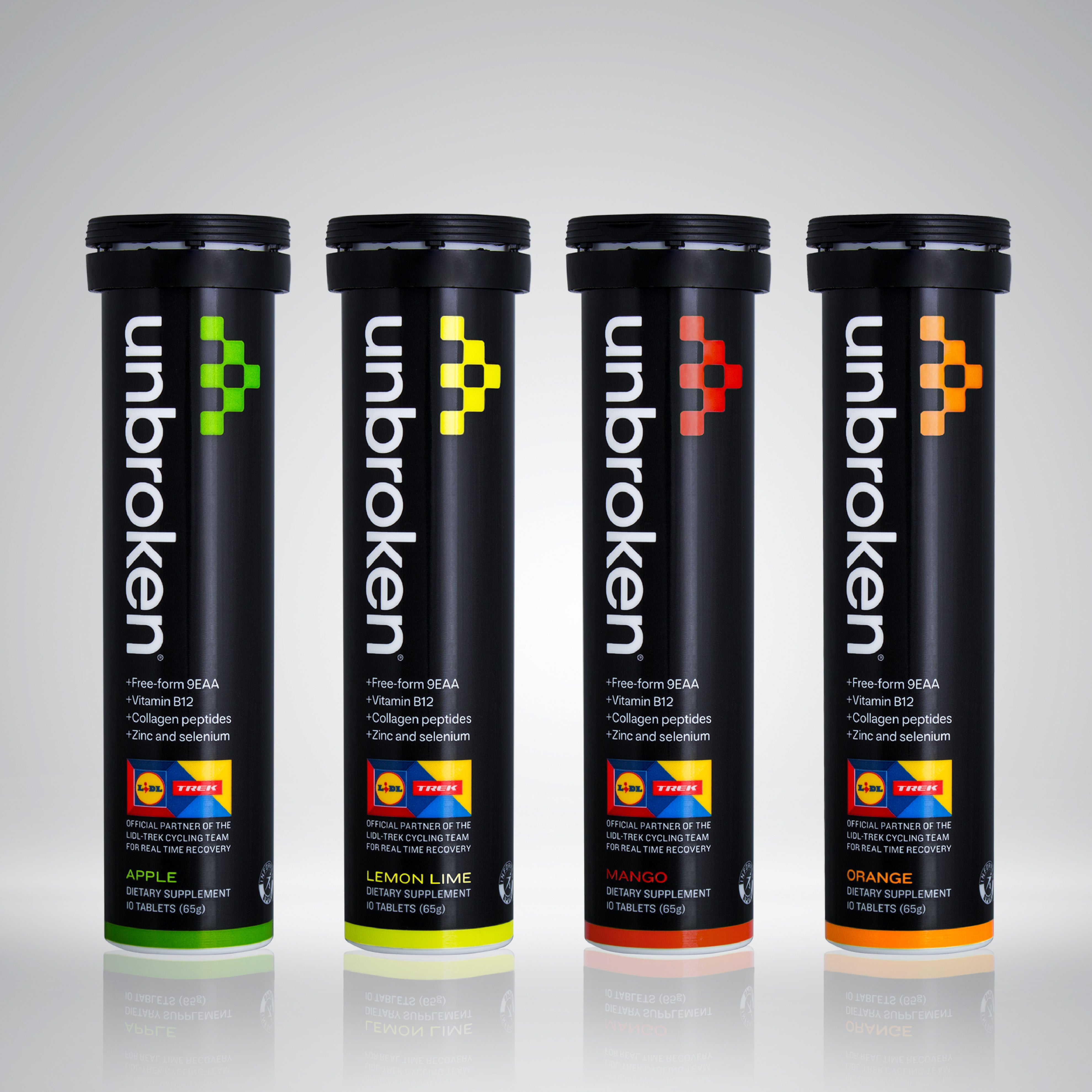
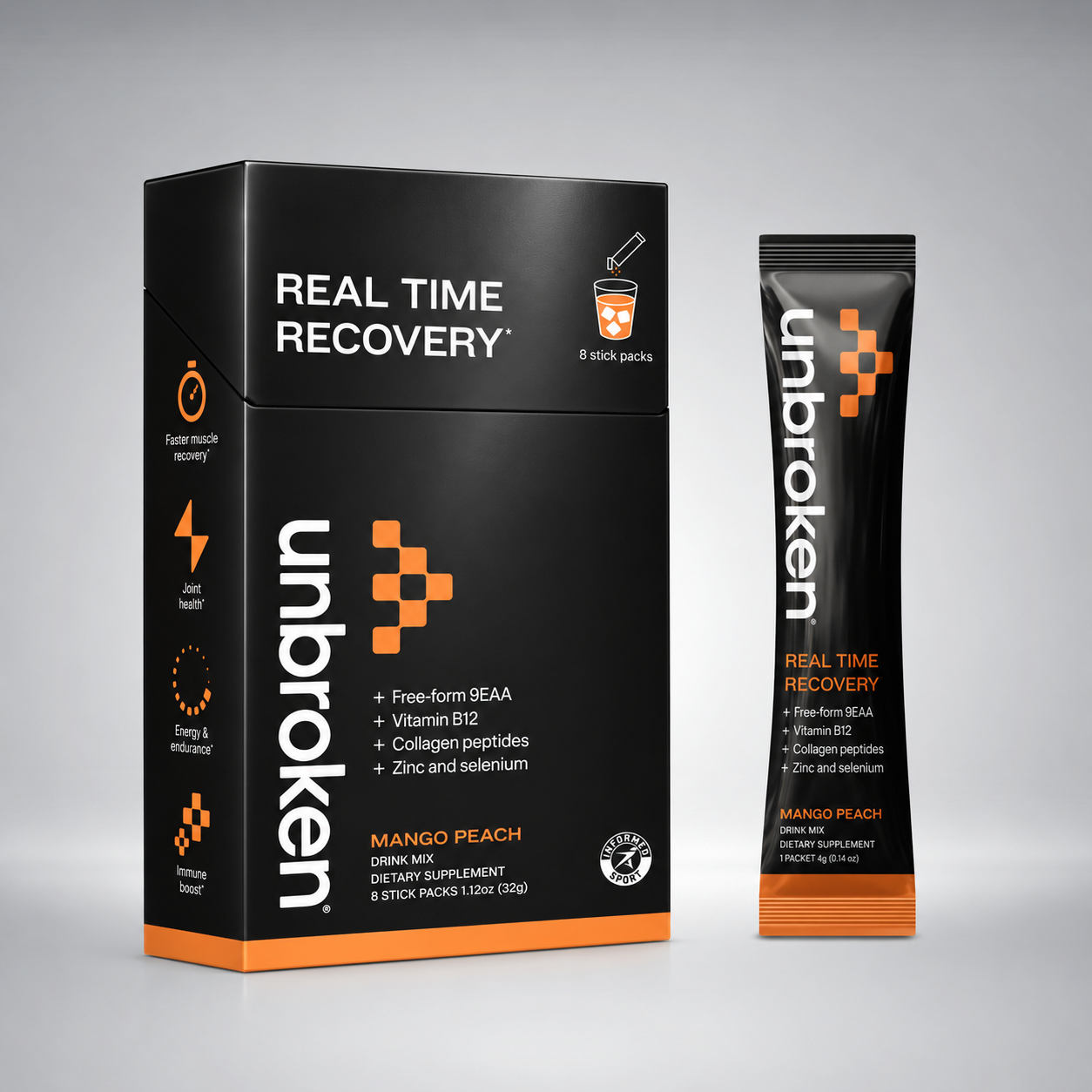
This is where Unbroken became particularly interesting to me. I believe in a food-first approach, and Unbroken starts with a whole-food protein source: salmon. It provides hydrolyzed salmon protein and amino acids in a remarkably compact, easy-to-consume form.
For the U.S. product, one tablet contains just 17 calories, yet delivers 25 amino acids, including all nine essential amino acids, together with 100% of the Daily Value for vitamin B12. For someone whose appetite and food intake have declined, that's an interesting combination: compact nutrition without having to consume a large meal. And it's incredibly easy to incorporate into your day. Simply add a tablet to the water you're already drinking.
“For me, Unbroken is about making good nutrition easier. It's compact, it's simple, and I can put it straight into the water I'm already drinking.”
I don't see Unbroken as a substitute for good food, resistance exercise, sleep or any of the other fundamentals of health. I see it as a practical nutritional tool that can fit alongside them, particularly when reduced appetite makes getting enough nutrition more challenging.
Recovery is part of progress
My appreciation for Unbroken isn't only professional. It's personal. I've raced bicycles for over 25 years, but preparing for six consecutive days of racing required a training load I hadn't experienced before. I needed to train hard, recover and be ready to go again the following day, which made nutrition, hydration, sleep and recovery fundamental to my ability to perform.
When I started using Unbroken, I felt a meaningful difference. I experienced less muscle soreness and better recovery than I had with other approaches I'd tried. It gave me confidence that I could wake up and be ready to train again. Eventually, Unbroken became something I used consistently - always in my cabinet and always in my bottle. Once you find something that works for you, you tend to stick with it.
“With Unbroken, I felt materially better in my recovery. I had less soreness, and I felt ready to go again. Once you find something that works, you stick with it.”
That experience made me think about recovery beyond athletic performance. Unbroken provides compact nutrition, but there's another side to recovery that I think is easy to underestimate: how you feel matters.
If you exercise today and wake up tomorrow feeling completely beat up, doing it again can be difficult. If you recover well and feel good, you're more likely to want to move again.
Maybe today you walk for 15 minutes. Next week it's 20. You start resistance training and gradually add a little more. The stairs become easier, you feel stronger and you gain confidence in what your body can do. And when you feel that progress, you want to keep going.
“If you feel good, you're more likely to want to do more. That's how progress builds - one step at a time.”
Don't try to change everything tomorrow
One of the biggest mistakes we can make with lifestyle change is trying to transform everything at once. I prefer to think incrementally: walk a little further this week, add a few minutes next week, begin some resistance exercise, improve one meal, prioritize sleep and give your body what it needs to recover. Then build on it.
The body has an incredible capacity to adapt. Something that feels difficult today can become normal, or even easy, over time. Our GLP-1 paper similarly emphasizes sustainable, enjoyable long-term exercise, with activity adapted to the individual's health, abilities and goals. You don't need to train like an elite athlete. You need a starting point that is safe and achievable, a pathway that allows you to keep progressing and that includes giving yourself grace when you miss a few days from time to time..
Measure more than weight
The scale is one measurement, but it shouldn't be the only one. Can you walk further? Are stairs becoming easier? Are you getting stronger? Are you maintaining muscle? Do you have more energy? Can you do things today that were difficult six months ago?
Those are meaningful measures of progress. Our paper discusses lean muscle not only in terms of strength and physical function, but also its relationship with metabolic health and glucose regulation. Ultimately, we're not simply trying to create a body that weighs less. We're trying to create a healthier, stronger and more capable one.
“Preserving muscle isn't just about strength today. It's an investment in how you want to live in the future.”
Consistency is what changes us
I've seen this throughout my career as a physical therapist, and I've experienced it personally as an athlete. The things we do consistently are the things that eventually become part of who we are. My father is 81, remains a very good golfer and gets on his stationary bike and lifts weights most days. It isn't a major decision each morning. It's simply part of his routine like eating breakfast or brushing his teeth..
Ultimately, we want healthy behaviors like exercise, good nutrition, hydration, sleep and recovery to become routine. Not extraordinary interventions we occasionally force ourselves to do, but normal parts of everyday life. This is why behavior change is such an important part of the GLP-1 conversation. Our paper emphasizes meaningful, achievable goals, consistency with physical activity and helping people integrate healthier behaviors into their daily routines.
“Medication can create an extraordinary opportunity for change. What we build around that opportunity matters.”
Building health for the long term
GLP-1 medications are changing the way we approach obesity and metabolic health, but I believe they also create an opportunity to think differently about what successful weight loss should look like. It's not simply about losing pounds. It's about preserving muscle, becoming stronger, moving more, eating well, recovering, sleeping and developing habits that make those changes sustainable.
As a physical therapist, that's what interests me most. And it's also why Unbroken interests me. When nutrition is compact, easy to incorporate and supports the body's recovery needs, it can become another practical tool within that broader lifestyle.
“Give your body what it needs, make it easier for your body to support you, and then keep showing up.”
Because the ultimate goal isn't simply to lose weight. It's to build a body - and a life - that allows you to keep doing the things you love and show up for those you love for as long as possible.
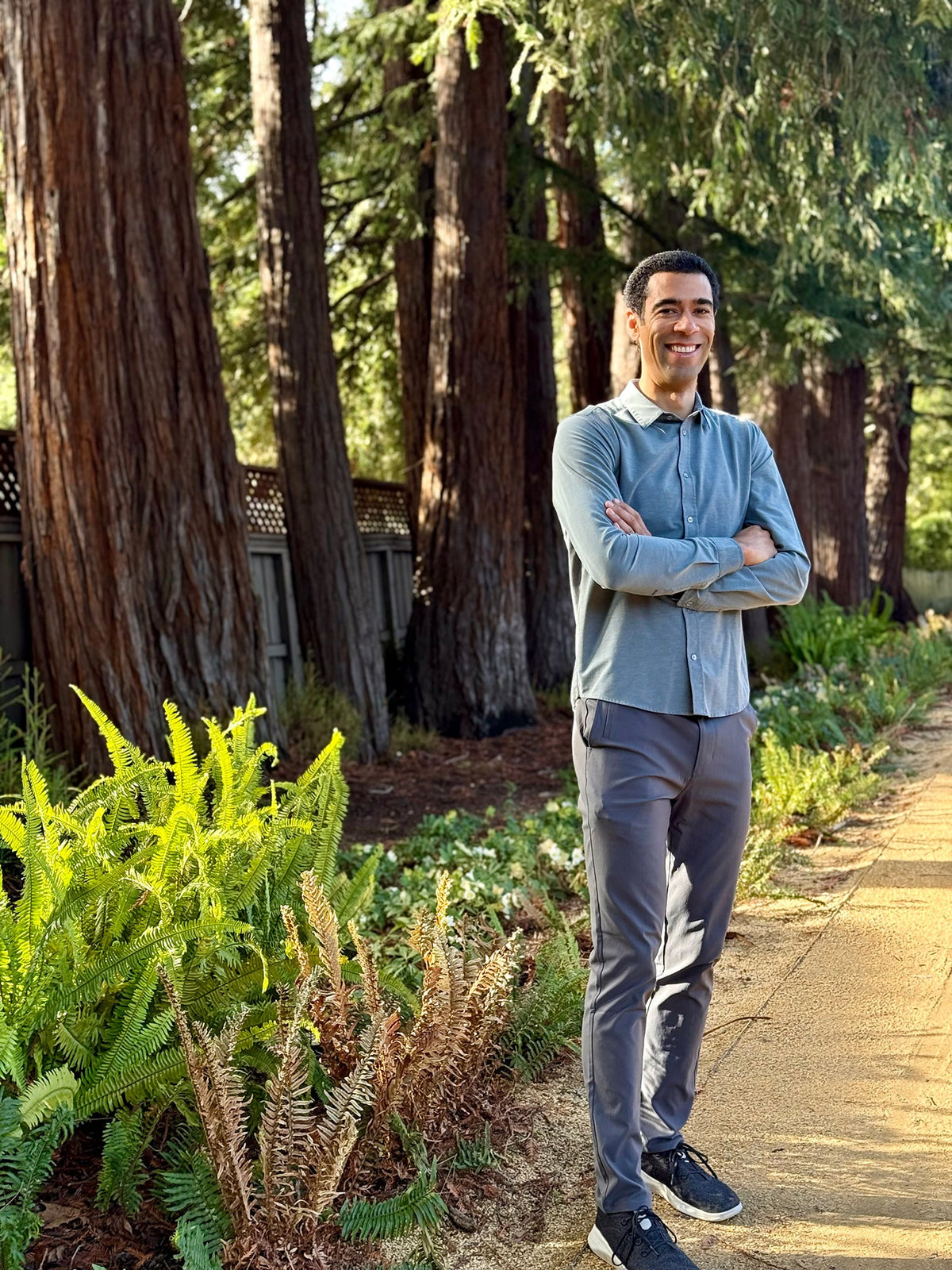
About Todd Norwood: Todd Norwood, PT, DPT, FACHE, is a physical therapist with Omada Health in the San Francisco Bay Area. He has a particular interest in the intersection of movement, muscle health and metabolic health and is co-author of the 2025 Physical Therapy & Rehabilitation Journal perspective, “Transforming Care: Implications of Glucagon Like Peptide-1 Receptor Agonists on Physical Therapist Practice.” Todd is also a lifelong cyclist who has raced for over 25 years, bringing his personal experience with training, performance and recovery to his professional perspective on helping people remain active throughout life.
This article reflects the author’s personal views and experience and is not medical advice. If you take GLP-1 or any other medication, talk to your doctor before changing your diet or adding food supplements.